

Simple Ways to Invest in International Stocks from India in 2026: Process, Benefits, and Tips
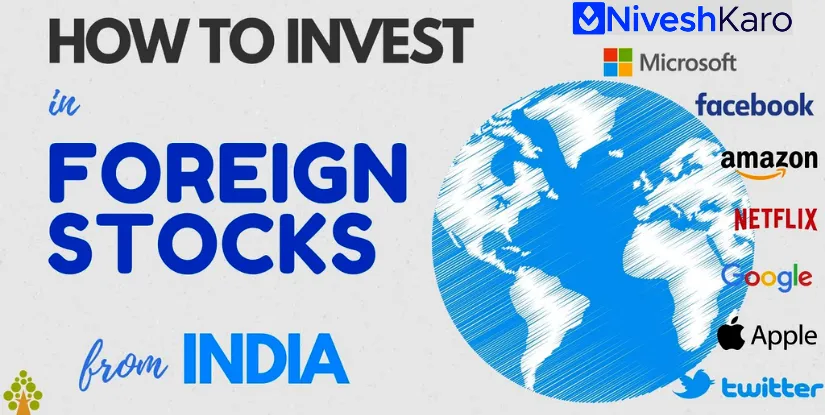
In 2026, the aspiration to own a piece of global giants like NVIDIA, Tesla, or Apple has become a mainstream reality for Indian investors. As the Indian economy integrates more deeply with global markets, the barriers to cross-border investing have significantly lowered. However, the regulatory landscape—governed by the Liberalised Remittance Scheme (LRS) and new TCS thresholds—requires a strategic approach.
Whether you are looking to hedge against rupee depreciation or participate in the AI-led NASDAQ rally, this 2,100+ word guide outlines the most efficient routes, tax implications, and compliance mandates for 2026.
1. Direct vs. Indirect Routes: Navigating the 2026 Landscape
Indian investors basically have two primary paths to global markets: the "Direct" brokerage route and the "Indirect" mutual fund route.
- The Direct Route: This involves opening an account with a US-based broker (like Charles Schwab or Interactive Brokers) or an Indian platform that partners with them (like INDmoney or Vested). This route offers the most control, allowing you to buy individual stocks and ETFs. In 2026, many of these platforms offer "Zero-Commission" trading for Indian residents.
- The Indirect Route (Feeder Funds): Domestic International Mutual Funds act as "feeder funds" that collect Indian rupees and invest them into a parent offshore fund (e.g., a NASDAQ 100 ETF).
- 2.0 Regulations: Following the SEBI (Mutual Funds) Regulations, 2026, these funds now feature a Base Expense Ratio (BER) framework that has reduced "hidden" layering costs by approximately 15-20 bps, making them much more competitive with direct investing.
2. The New TCS Threshold: Utilizing the Rs. 10 Lakh Exemption
The most critical update for 2026 is the revised TCS on Foreign Stocks India.
- The Exemption Limit: As of the 2025-26 fiscal cycle, the threshold for Tax Collected at Source (TCS) on LRS remittances has been increased from Rs. 7 Lakh to Rs. 10 Lakh per financial year.
- The Rates: * Up to Rs. 10 Lakh: 0% TCS.
- Above Rs. 10 Lakh: A flat 20% TCS is levied on the excess amount.
- Strategic Tip: If you plan to invest Rs. 12 Lakh, you will pay 20% TCS only on the Rs. 2 Lakh excess (Rs. 40,000). Since this TCS is not an "extra tax" but an advance payment, you can claim it as a refund or offset it against your total tax liability when filing your ITR.
3. LTCG Simplification: The Flat 12.5% Tax Rate
Taxation on foreign assets has seen significant "parity" reform.
- Holding Period: To qualify as a Long-Term Capital Gain (LTCG), foreign stocks must now be held for more than 24 months.
- The Rate: The 2026 tax regime has moved away from complex indexation. LTCG on foreign assets is now taxed at a flat 12.5% (plus surcharge and cess).
- Short-Term Gains: If sold within 24 months, gains are added to your income and taxed as per your applicable income tax slab.
4. NSE IFSC & GIFT City: The Zero-STT Corridor
GIFT City (Gandhinagar) has emerged as the preferred "onshore-offshore" hub. Through the NSE IFSC platform, Indian residents can trade NSE IFSC Receipts (unsponsored depository receipts) of over 50 major US blue-chip stocks.
- Why use it? Zero STT & GST: Transactions are exempt from Securities Transaction Tax, Stamp Duty, and GST.
- USD Operations: You can hold and trade in US Dollars directly within the GIFT City ecosystem.
- Indian Regulation: It operates under the IFSCA, providing a familiar legal framework compared to US-based SEC regulations.
5. Funding the Account: Digital LRS & Form A2
Gone are the days of manual bank visits. In 2026, "Same-Day LRS" is the standard.
- Form A2: This is the mandatory declaration form for any remittance under the Liberalised Remittance Scheme 2026. Modern apps automate this form digitally during the fund transfer process.
- Processing Time: Most major Indian private banks (HDFC, ICICI, Axis) now process these transfers within 4 to 12 hours, provided the purpose code (typically S0001 for equity investment) is correctly selected.
6. Fractional Investing: Owning "Slices" of Giants
A major advantage of the US market is the ability to buy Fractional Shares.
- The Concept: You don't need $400 to buy one share of a high-priced stock. You can buy as little as $1 worth (a "fractional unit").
- Wealth Accessibility: This allows a retail investor with just Rs. 5,000 to build a diversified "FAANG" portfolio, owning small pieces of NVIDIA, Tesla, and Microsoft simultaneously.
7. US Dividend Tax & The Foreign Tax Credit (FTC)
If you own US stocks that pay dividends, the US government typically withholds 25% as tax (as per the India-US DTAA).
- Avoiding Double Taxation: You do not have to pay full tax in both countries. Under the Double Taxation Avoidance Agreement (DTAA), you can claim a Foreign Tax Credit (FTC) in India.
- Form 67 Mandate: To claim this credit, you must file Form 67 on the Income Tax e-filing portal before filing your ITR. This ensures that the 25% paid in the US is adjusted against your Indian tax liability.
8. Schedule FA Mandate: Reporting to Avoid Penalties
Transparency is non-negotiable in 2026. Every resident Indian holding foreign assets must report them in Schedule FA (Foreign Assets) of their ITR-2 or ITR-3.
- The Rule: You must disclose the peak value, closing value, and any income earned from foreign stocks held at any time during the relevant calendar year.
- The Penalty: Failure to report—even if the income is small—can attract a penalty of up to Rs. 10 Lakh under the Black Money Act. Accuracy here is vital for your long-term "Financial Health."
9. Relocation of Funds: The April 2026 Shift
A transformative shift occurring in April 2026 is the Tax-Neutral Relocation of offshore funds.
- The Move: SEBI and the Finance Ministry now allow offshore ETFs and Mutual Funds (previously based in Singapore or Mauritius) to relocate their base to GIFT City without triggering capital gains tax for the investors.
- Benefit: This will lead to a surge in high-quality, dollar-denominated investment products available directly to Indian residents without the "offshore" compliance friction.
Conclusion
Investing in international stocks from India in 2026 is no longer a luxury for the ultra-wealthy. By utilizing the Rs. 10 Lakh TCS threshold, leveraging the GIFT City corridor, and strictly adhering to Schedule FA reporting, you can build a robust global portfolio. The key is to start small with fractional shares and gradually expand as you become comfortable with USD/INR fluctuations.
Start Your Global Journey with NiveshKaro.com
Are you still keeping all your wealth in one currency? NiveshKaro.com’s "Global Diversifier" tool helps you identify the best international ETFs based on your risk profile and current LRS limits.
Related Articles:
- What Is A Demat Account? How To Choose The Best One And Understand Transaction Charges In India
- How To Select Best Shares: Criteria And Research Tips For Investors
- ETFs And REITs Explained: Innovative Investments For Indian Investors
- Mutual Funds And SIPs: How To Select The Best Ones For Wealth Creation
- Top 5 Investment Sectors India 2026 – Renewables, Fintech, EV & Digital Infrastructure
Read More: Dive deeper into investment options with these related guides on Demat accounts, share selection, ETFs, mutual funds, and emerging sectors to build a diversified global portfolio.
AUTHOR


Subscribe To Our Newsletter
Subscribe to our newsletter to receive up to date news, ideas and resources to help to manage your investment and risks.